
Church Blog

The Beauty of Hidden Faithfulness
The Beauty of Hidden Faithfulness
Matthew 6:4
Matthew 6:4
“…so that your giving will be in secret; and your Father who sees what is done in secret will reward you.” (Matthew 6:4, NASB)
Often when we consider the word “secret” it bears a negative connotation. Things done in secret are often the kind of things we don’t want anyone to find out about. They are often shameful, foolish, sinful. However, there can also be things done in secret that are honorable and righteous. Think of a seed. It seems ordinary, unremarkable even. It stays hidden for a long time completely unnoticed. Everyone walks by and gives it no thought and are completely unaware of its presence. However, one day the work done beneath the surface bursts forth in beauty and life. Likewise, there is a kind of faithfulness the world will never celebrate. It happens in the quiet, unseen places. The areas of life and ministry that are often overlooked. It is the service no one applauds, the prayer no one hears, the sacrifice no one posts about, the act of obedience that leaves no public footprint. And yet in the kingdom of God, this hidden faithfulness is often more precious than the visible kind.
We live in an age that rewards being seen. People are desperate for recognition, affirmation, and applause. Social media exists nearly entirely for this purpose. In a world that shouts “look at me!”, we may be tempted to believe that what matters most is what can be measured by public approval. But Jesus speaks directly against that way of thinking. The Father sees what is done in secret. The Lord notices what others overlook. Heaven keeps a different record than earth does. This means that your hidden obedience is not hidden to God. The early morning prayer no one knows about, the quiet choice to speak kindly when it would be easier to be sharp, the repeated act of serving when your own energy is gone, the private refusal to sin when nobody would find out—these things are not small in the eyes of God. They are the very substance of faithfulness. In reality, some of the most important work you will ever do will never be announced from a pulpit, recognized with a spotlight or even noticed by anyone. It will be done in the ordinary and quiet places of life. A mother faithfully loving her children when she is tired. A husband choosing patience again. A believer opening the Bible when no one is watching. A church member quietly praying for the same struggling soul week after week. A servant setting up chairs, cleaning a room, or sending a note of encouragement that no one else will ever see.
Secret faithfulness is beautiful because it is free from performance. It does not have to impress anyone. It does not need to be defended. It does not rely on applause to be real. It simply does what God has called it to do, trusting that what others miss, the Lord Himself sees. That is often how God works. Like a seed, He grows strength in the secret place before He ever displays it in public. He forms character in obscurity before He entrusts influence. He deepens integrity when no one is looking so that a person can be trusted when everyone is. The faithfulness that endures under pressure usually begins long before the pressure arrives, in those hidden moments when obedience felt costly but no one else knew. This is one of the great comforts of Scripture: God does not overlook the unseen. Human beings often do. Churches sometimes do. Families sometimes do. But God does not. The Father who sees in secret remembers. He values. He rewards. Not always immediately, and not always in ways the world would choose, but truly and faithfully.
So if your obedience feels unnoticed, do not despise it. If your service seems ordinary, do not call it insignificant. If your faithfulness has taken root in places no one applauds, take heart. The Lord sees. He knows. He is not unjust to forget the labor of love shown in His name. There is a profound freedom in this. You do not have to live for an audience. You do not have to become public to become valuable. You do not have to be recognized by others to be known by God. Hidden faithfulness is still real faithfulness. In fact, it may be the clearest kind of faithfulness there is, because it is stripped of all pretense and pride. It is obedience for God’s sake alone. This week, walk quietly and faithfully. Pray when no one knows. Serve when no one thanks you. Forgive when no one sees the cost. Give when no one can reward you. Keep your heart steady before God. Because the beauty of hidden faithfulness is this: what grows in secret now, will be rewarded by God in eternity.
Yours in Christ,
Pastor John
The Beginning and the End
The Beginning and the End
Isaiah 46:9-10
Isaiah 46:9–10
9 “Remember the former things long past,
For I am God, and there is no other;
I am God, and there is no one like Me,
10 Declaring the end from the beginning,
And from ancient times things which have not been done,
Saying, ‘My purpose will be established,
And I will accomplish all My good pleasure’;
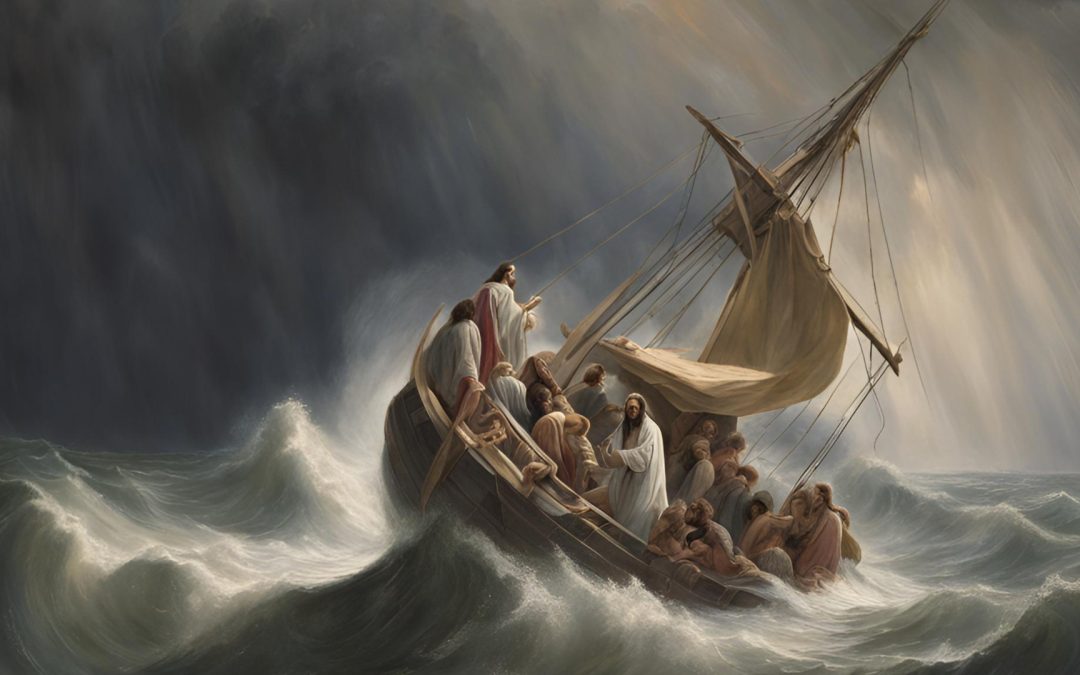
There are moments in all of our lives when life feels like a ship in a dark storm—wind howling, waves slamming the hull, and the shoreline nowhere in sight. It’s in those nights, when peace feels impossible and every option seems risky, that the truth of Isaiah’s words become a lifeline: God declares the end from the beginning. What does this mean? In a word — God is sovereign. He knows the map even when we are lost. God has the answer even when we are perplexed. God holds the future even when the future seems to be slipping away. Life sometimes arrives in a barrage—news that shocks, plans that fail, relationships that fray, doors that close without warning. But those events do not mean God is absent or surprised; they mean you are living inside a story that only God knows the final chapter of.
God is sovereign — consider this for just a moment. This truth does not deny the reality of fear. We all will have moments when our hearts race, when anxiety wakes us in the night, when doubt whispers in our ears. Scripture never promises that the believer will be exempt from those very human responses. The promise is that we do not have to live there. The Lord’s sovereignty turns fear from a master into a messenger: it awakens us to pray, to repent, to seek counsel, to move in obedience. When the sea is swelling around you, the Christian’s job is not to pretend that the waves do not exist, but to remove your eyes from the waves and fix them on the Captain of the vessel. Belief in God’s sovereignty does not make storms vanish. No, it does something better: it strips them of their power to enslave our souls. When we insist on controlling every outcome, our hearts become anxious and brittle. When we remember that God has declared the end from the beginning, our hearts can relax into peace and hope because understanding God’s sovereignty changes how we act in the storm. Instead of frantic attempts to control every variable, we pray steady prayers and take the next faithful step. Instead of making hurried decisions to “do something” that only cements confusion, we slow down to listen and wait when waiting is required. Sovereignty is not a spiritual anesthetic that removes pain; it is the hand that steadies us, the horizon that reorients our aim. This is not vague optimism. It is assurance that transforms how we live. Because God declares the end from the beginning, you can walk through today’s uncertainty with a steadier heart. When worry says, “What will happen next?” God replies, “I have already worked this into My design.” When doubt asks, “What if God has abandoned me?” God answers, “I am the God who declares the end; I am the One who never forgets.” This is the kind of truth that casts out fear: not by denying the peril but by exposing it to the light of God’s eternal purposes. To live under that light is to know a grace that steadies the stormy seas and quiets to anxious soul.
If you are in the middle of a storm, let’s remember Isaiah’s practical truth that has steadied Believers for thousands of years. First, remember the former things. Remember and re-tell the story of God’s faithfulness in your life. Memory of God’s faithfulness is medicine to the fearful heart. Second, hold fast to the Lord’s presence. Prayer is not merely a one way request line; it is an ongoing conversation that reminds us that God is near. And third, be assured that God designed the beginning, the end, and every step in between. Stop bargaining for a stormless passage. Instead, remember the truth of Isaiah: the Lord is sovereign.
Yours in Christ,
Pastor John

When Waiting Is the Answer
When Waiting Is the Answer
Psalm 27:14
Psalm 27:14
14 Wait for the Lord; Be strong and let your heart take courage; Yes, wait for the Lord.
My friend sat across from me with the weight of leadership pressing down on his shoulders. He’d been praying. The church leadership had been praying. They’d sought God’s direction earnestly and honestly on several important decisions facing their congregation. But God hadn’t answered. Not clearly. Not in the way they expected. Some leaders felt God was calling them in one direction while others sensed a different leading. The discernment wasn’t unified and God’s clarity wasn’t coming. So they made a decision. Since God wasn’t giving them a clear answer, they would move forward anyway. The projects sounded good. Surely God would bless good intentions and good works, even without explicit direction. They moved forward in faith, they told themselves. But what followed wasn’t blessing. What followed was frustration, tension and division. The very things they’d hoped to avoid. This situation reminded me of a question that so many believers wrestle with: “How long do we wait? When do we stop waiting and start moving?” It’s a fair question. It’s a question that reveals something deep about how we understand faith, God’s timing, and how we understand the nature of waiting itself. There’s a common narrative in modern Christianity that goes like this: Faith is action. Faith is moving forward. Faith is trusting God even without clear direction. Faith is doing something rather than doing nothing. There’s some truth in this. Faith does sometimes require action. Faith does sometimes require stepping out when the path isn’t fully illuminated. But this narrative has become dangerous. It’s become an excuse for impatience. It’s become a justification for moving ahead without God’s clear direction. We tell ourselves: “This is a good project. This will help people. This is ministry. Surely God wants us to do it.” So even though we haven’t received clear direction, we move forward anyway. We call it faith. We call it trust. We call it obedience. But often it’s not. It’s impatience. It’s pride. It’s the belief that our wisdom, our timing, and our judgments are sufficient even without God’s explicit direction. And it always leads to the same place: frustration, division, and ruin.
Here’s what we need to understand: Sometimes God’s answer to our prayers is not yes. It’s not no. It’s wait. This is the answer that tests our faith the most. This is the answer that reveals what we truly believe about God. This is the answer that separates shallow faith from deep faith. When we pray for direction and God says “yes,” that’s easy. We move forward with confidence. When we pray for direction and God says “no,” it’s difficult but ultimately clarifying. At least we know what not to do. But when we pray for direction and God says “wait”—that’s where faith is truly tested. Because waiting requires something that action doesn’t: trust in God’s timing when we can’t see the endpoint. Trust in God’s wisdom when our own wisdom is compelling us to move. Trust in God’s goodness when His silence feels like abandonment. In truth, waiting is the answer that demands the most from us. It’s the answer that requires us to surrender our timeline to God’s timeline. It’s the answer that forces us to acknowledge that we don’t know what God knows, we can’t see what God sees, and we need to trust Him even when we don’t understand. Psalm 27:14 speaks directly to this: “Wait for the Lord; Be strong and let your heart take courage; Yes, wait for the Lord.” God tells us to wait…twice in a row. When God has to tell us something multiple times within a few sentences He does so because He knows this will be a struggle for us. God says “wait…yes wait”. That is hard to do. But notice what also accompanies the command to wait: “Be strong and let your heart take courage.” Waiting is not passive resignation. Waiting is not giving up. Waiting is active trust. Waiting is courage. Waiting is faith expressed through the discipline of restraint. Restraint and caution are a lost art in this fast paced culture. We want what we want and we want it now — that is is the attitude of this age. And the problem with this attitude is that it becomes easy to justify everything. We call it “faith”, but really it is is just impatience wrapped up in a Christian verbiage. After all, who can argue with you if you are “trusting God through faith”. “This project is good. This will help someone. This is a good use of my time, money or resources”. However, just because something is good doesn’t mean it’s God’s timing. Just because something is ministry doesn’t mean God is calling you to do it right now. Just because something would help people doesn’t mean it’s what God wants your church to pursue in this season. God’s timing is not the same as good timing. Sometimes the answer is just “wait”. And here’s what happens when we wait. Here’s what we learn in the silence. If my friend’s church would have waited longer before moving forward, they would have learned something crucial. They would have discovered that their leadership wasn’t unified. They would have realized that not everyone was sensing the same direction from God. They would have recognized that forcing unity where unity didn’t exist would create exactly the problems they’re now facing. Waiting would have given them time to pray more deeply. To seek God more earnestly. To examine their own motives more carefully. To allow the Holy Spirit to work in their hearts and bring genuine unity instead of forced agreement. Waiting would have revealed what moving forward too quickly concealed: that perhaps God wasn’t ready to move forward yet. That His timing wasn’t aligned with their timeline.
Waiting teaches us humility. It teaches us that our wisdom is limited. Waiting teaches us faith. Not the kind of faith that acts without direction, but the kind that believes God is working even when we can’t see what He’s doing. Waiting teaches us discernment. It gives us time to distinguish between our desires and God’s direction. Between what sounds good and what God is actually calling us to do. Waiting teaches us obedience. Because waiting, when you don’t want to wait, is the deepest form of obedience. I know that waiting is hard and that waiting often feels like failure. Waiting feels like you’re not being faithful. Waiting feels like you’re letting opportunities pass by. But here’s the promise: When you wait on God, when you have the discipline to restrain yourself from moving forward without His clear direction, you will see His hand move in ways that moving ahead too quickly would have prevented. You will experience His blessing in ways that your own plans never could have produced. And in that waiting, in that discipline of restraint, God will do something far greater than any project could accomplish: He’ll build genuine unity. He’ll clarify His true direction. He’ll deepen the faith of His people.
Yours in Christ,
Pastor John

The Silent Killer
The Silent Killer
Revelation 3:15-16
Revelation 3:15–16
15 ‘I know your deeds, that you are neither cold nor hot; I wish that you were cold or hot. 16 So because you are lukewarm, and neither hot nor cold, I will spit you out of My mouth.
There is a danger lurking in the life of every believer. It’s not something you can see. It’s not something overtly vile or sinful. It doesn’t announce itself with fanfare or make a dramatic entrance into your life. It’s a silent killer. A thief that operates in darkness. A slow poison that you don’t taste until it’s already done its damage. The danger is spiritual complacency. It’s lukewarmness. It’s the gradual cooling of a once-burning faith. And here’s what makes it so dangerous: it sneaks up on you. It doesn’t arrive all at once. It doesn’t knock on your door and introduce itself. It creeps in quietly, almost imperceptibly, through a series of small compromises that seem insignificant in the moment. It starts with a little laziness. You miss church one Sunday because you’re tired. “Just this one time. No big deal”. You tell yourself you’ll be back next week. It continues with small disobediences. The Spirit nudges you to reach out to someone with the Gospel. But you’re uncomfortable. You’re afraid of rejection. So you walk past and ignore the nudge. But the compromise continues and it deepens with neglect of your spiritual disciplines. You skip your Bible reading because you’re busy. You miss your prayer time because you’re tired. You tell yourself you’ll catch up tomorrow, but tomorrow comes and goes. And after a while—maybe weeks, maybe months, maybe years—something terrible has happened. These small compromises have accumulated. These minor indifferences have compounded. And you wake up one day and realize you’re not the person you used to be. Your passion has cooled. Your urgency has dissipated. Your fire has been extinguished. This is the silent killer. This is the danger that harms more Christians than obvious and dramatic temptations ever could. Because you don’t see it coming. You don’t recognize it while it’s happening and by the time you realize what’s occurred, the damage is deep. Maybe as you are reading this you are recognizing yourself — maybe a little more than you’d like to admit.
However, there is great news! Jesus doesn’t leave us in this danger without a remedy. The beautiful truth is this: spiritual complacency is not permanent. Lukewarmness is not irreversible. The fire that has cooled can be rekindled. The passion that has faded can be restored. Jesus doesn’t just diagnose the disease, He also offers the cure.
Revelation 3:19–20
19 Those whom I love, I reprove and discipline; therefore be zealous and repent. 20 Behold, I stand at the door and knock; if anyone hears My voice and opens the door, I will come in to him and will dine with him, and he with Me.
Notice the tenderness in Jesus’ words. He reproves and disciplines those He loves. He doesn’t abandon them. He doesn’t cast them aside. He confronts them because He loves them. He calls them back because He wants them. And the invitation is full of grace: “Behold, I stand at the door and knock.” Jesus is standing at the door of your lukewarm heart. He’s knocking. He’s waiting. He’s not condemning you from a distance. He’s standing there, knocking, asking to be let back in. All you have to do is open the door. The first step in rekindling your fire is to recognize what has happened. To name it. To stop pretending that everything is fine when it’s not. This requires real honesty. Not the kind of honesty where you acknowledge you’ve been a little lazy, but the kind where you look in the mirror and say, “My faith has cooled, I’m not as passionate about Jesus as I used to be, I’ve become indifferent.” This recognition is painful. It’s uncomfortable. It’s humbling. But it’s necessary. You cannot cure a disease you refuse to acknowledge.
Once you’ve recognized the complacency, the next step is to return. To recover what you’ve lost. This doesn’t mean you have to do something dramatic. You don’t have to join a monastery or quit your job to serve in full-time ministry. You simply have to return to the basics and go back to the spiritual disciplines that once nourished you. Return to regular church attendance. Not occasionally. Not when you feel like it. But consistently. Make it non-negotiable, because worship with God’s people is not optional for a believer, it’s essential. It’s the place where you’re reminded of who God is. It’s the place where you’re encouraged by other believers. Return to your Bible. Not as a duty, but as a hunger. Spend time in God’s Word. Read it, study it, meditate on it. Because God’s Word is living and active and it’s sharper than any two-edged sword. It cuts through the complacency and speaks directly to your soul. Return to prayer. Not rushed prayers before meals and bedtime. But real prayer. Honest prayer. Desperate prayer. Bring your whole heart before God. Tell Him your struggles. Ask Him for help. Listen for His voice. Because prayer is the lifeline that connects you to God. When you stop praying, you cut yourself off from His power. Return to sharing your faith. When opportunities arise, take them. When the Spirit nudges you, obey. Because faith grows when it’s exercised. Return to serving. Find a place where you can use your gifts. Serve with your hands. Serve with your time. Serve with your heart. Because serving others is how you serve Jesus and it’s how you keep your focus on His kingdom instead of your own comfort.
But here’s the most profound remedy. Here’s what will truly rekindle your fire: reconnect with your first love. Do you remember when you first believed in Jesus? Do you remember the joy? The wonder? The sense of being rescued? The overwhelming gratitude that someone—God Himself—loved you enough to die for you? That first love is still available to you. That wonder hasn’t disappeared and that joy is still possible. Jesus hasn’t changed, His love hasn’t cooled and His commitment to you hasn’t wavered. What’s changed is your focus; your attention has drifted, your heart has been divided. Your passion has been redirected toward other things, but you can come back and you can reconnect. You can fall in love with Jesus again. Spend time reflecting on what Jesus has done for you. Not abstractly, but personally. He died for you. He rose for you. He intercedes for you. He loves you with an everlasting love. He chose you before the foundation of the world. He paid the price for your sins. He secured your eternity. Let that sink in. Not as theology, but as personal reality; Jesus did that for you. Muse on these truths and let these truths reignite your passion and rekindle your fire. The indifference will be replaced by urgency and the complacency will be replaced by commitment. Jesus is standing at the door of your heart. He’s knocking. He’s waiting. All you have to do is open the door.
Yours in Christ,
Pastor John

The Beginning of Wisdom
The Beginning of Wisdom
Exodus 19:18-19
Exodus 19:18–19
8 Mount Sinai was all in smoke because the Lord came down upon it in fire. Its smoke went up like the smoke of a stove. And the whole mountain shook. 19 The sound of the horn became louder and louder. Moses spoke, and God answered him with thunder.
Picture it. The mountain trembling. The earth shaking beneath your feet. Smoke billowing upward like a furnace consuming everything. Thunder crashing from heaven. Fire descending. The very presence of God so overwhelming, so terrifying, so absolutely consuming that the entire nation of Israel stood at a distance, unable to approach. This was not a gentle encounter. This was not a comfortable meeting. This was the manifestation of raw, infinite, terrifying holiness. This was God revealing Himself in such power and majesty that the people trembled in fear. And here’s what we must understand: This is the same God we serve today. Not a softened version. Not a domesticated deity who has mellowed with age. The God who descended on Mount Sinai in fire and thunder is the God who sits on His throne this very moment. The God whose presence caused the mountain to quake is the God who knows every thought you think. The God whose holiness was so overwhelming that the people begged Moses not to let Him even speak to them is the God before whom you will stand and give account. We have forgotten this. We have allowed our minds to reshape our understanding of God into something manageable, something comfortable. But the God of Mount Sinai cannot be domesticated. He is the Lord of thunder, fire and power. When was the last time you encountered the fear of the Lord? When was the last time you trembled before His holiness? This is a question that nobody really asks anymore. I don’t mean for you to fear for your salvation. Nor to be anxious about whether God loves you. But do you genuinely fear God? The kind of fear that makes you tremble, that sobers you, that reminds you that you are standing before the Almighty. It seems to me that our current church culture has repackaged God into something manageable. God is our buddy. God is our “homeboy”. God is the “bid guy” upstairs that just wants us to be happy. We’ve turned the infinite, holy, terrifying God of Scripture into a cosmic friend who exists to affirm our choices and validate our feelings.
But this is not the God of the Bible. This is an idol we’ve constructed in our own image. The God of Scripture is terrible and awesome. The God of Scripture is holy beyond our comprehension. The God of Scripture is so powerful that when people encounter Him, they fall on their faces in terror. When Isaiah saw the Lord high and lifted up, he cried out, “Woe is me, I am ruined!” When John saw the risen Jesus, he fell at His feet as though dead. These were not people who felt comfortable and affirmed. These were people who encountered the holiness of God and were undone by it. And Scripture tells us that this fear—this awe, this reverence, this trembling recognition of God’s majesty—is where wisdom begins. Proverbs 9:10 states a principle that runs throughout Scripture: “The fear of the Lord is the beginning of wisdom.” The beginning. The foundation. The starting point. This is not fear in the sense of terror that paralyzes you. This is fear in the sense of reverence—a deep, profound respect for God’s holiness, power, and authority. It’s the recognition that God is God and you are not. It’s the acknowledgment that God is infinitely greater than you. It’s the understanding that your life is held in His hands and that He will judge all things. When you truly fear the Lord, everything else comes into proper perspective. Your pride diminishes. Your arrogance evaporates. Your certainty about your own righteousness crumbles. You see yourself clearly—not as the center of the universe, but as a creature standing before the Creator. The person who fears the Lord understands that their choices have consequences. The person who fears the Lord takes sin seriously. The person who fears the Lord recognizes that they will give account for every word, every deed, every thought. This fear produces a kind of sobriety. A kind of seriousness about life. A kind of intentionality about how you live.
But tragically, many in the church has lost this fear. We have lost the reverence. We have lost the awe. We have lost the trembling recognition of the Almighty. The Ancient of Days. And the consequences are everywhere. Look at the trajectory of a life lived without the fear of God. It begins with small compromises. A little dishonesty. A little lust. A little pride. Nothing serious. Nothing that requires real repentance. But without the fear of God to restrain you, without the reverence to remind you of His holiness, without the awe to keep you humble—those small compromises become larger ones. That little dishonesty becomes systematic deception. That casual lust becomes addiction. That subtle pride becomes arrogance. And before long, you’re living a life that bears no resemblance to what you once claimed to believe. You’re making choices you never thought you’d make. You’re becoming someone you never thought you’d become. This is what happens when you lose the fear of the Lord. Wisdom departs and foolishness takes its place. And life begins its slow descent into destruction. What might change in your life if you allowed the fear and reverence of the Lord guide your choices? This is not a call to anxiety. This is a call to sanity. This is a call to see reality clearly. This is a call to recover the proper perspective that comes from understanding who God is and who you are in relation to Him. Here’s what’s remarkable: when you recover the fear of the Lord, wisdom follows. Not as something you have to earn or achieve. But as a natural consequence of seeing things rightly. When you fear God, you understand that your reputation doesn’t matter as much as your character. So you pursue integrity even when no one is watching. When you fear God, you understand that temporary pleasure isn’t worth eternal consequence. So you restrain your desires and pursue what honors Him. When you fear God, you understand that your words have power. So you speak carefully, truthfully, kindly. When you fear God, you understand that your time is limited and precious. So you invest it in what matters eternally rather than what merely entertains temporarily. When you fear God, you understand that you will give account. So you live intentionally, seriously, reverently. This is the wisdom that flows from the fear of the Lord. Not a grim, joyless existence, but a life marked by clarity, purpose, and peace. A life where you’re not constantly second-guessing yourself or regretting your choices. A life where you’re moving in the direction God has called you, not constantly fighting against His will.
This week, I invite you to do something contemplative. Find a quiet place. Sit alone. And allow yourself to genuinely consider: Do I fear the Lord? Not in an anxious way. But genuinely: Do I recognize His holiness? Do I understand His power? Do I tremble before His majesty? Do I take seriously the reality that I will stand before Him and give account? If the answer is no—if you’ve lost that reverence, if you’ve grown too comfortable, if you’ve forgotten the fear of the Lord—then repent. Return to it. Let the Spirit awaken in you again the awe and reverence that should characterize every believer’s relationship with God. Because the fear of the Lord is not the enemy of joy. The fear of the Lord is the foundation of all true wisdom, all genuine peace, all lasting joy. At Mount Sinai, God’s presence was so overwhelming that the people could not draw near. But through Jesus Christ, our faithful mediator, we now have access to the Father. Yet this access demands reverence. When you approach God, you must stand in awe of Him. Worship Him with everything you have. Fear Him. Let that fear of God penetrate your mind and transform how you live—so that you become a man or woman marked by wisdom, guided at every turn by the fear of the Lord.
Yours in Christ,
Pastor John

The Babbling Fool
The Babbling Fool
Proverbs 10:8
Proverbs 10:8 (NKJV)
8 The wise in heart will receive commandments, but a prating fool will fall.
This week during a family devotion time we came across Proverbs 10:8 and this very unusual word. “Prating”. To be honest, I couldn’t remember a time in my life that I had ever even heard the word. What is prating? To put it simply, it’s mindless babble. It’s the endless stream of words that pours out of a mouth with no restraint, no thought, no purpose. It’s talking just to hear yourself talk. It’s filling silence with noise. It’s speaking whatever random thought comes to mind. It’s speaking without listening. And Solomon writes that the fool cannot stop himself from prating. And we are warned that this fool will fall.
We live in a world that celebrates prating. Social media has transformed mindless babble into a virtue and an art form. We’re encouraged to broadcast our thoughts instantly, to “vent” our frustrations carelessly, share our opinions constantly and to fill every moment with commentary. Silence has become uncomfortable and restraint is seen as weakness. But Scripture has always warned against this tendency. Later in chapter 10 of Proverbs we are warned that with many words comes many sins. When you speak without restraint, sin follows. The connection is not coincidence—it’s inevitable. More words create more opportunities for falsehood, exaggeration, gossip, slander, course joking and just outright foolishness. The reason is because words reveal what’s actually in your heart. When you prate you give occasion for the sinful tendencies of your flesh to pour out like vomit. Selfishness, bitterness, pride, envy and often, simply just the stupidity that lives within you. But here’s what makes prating so serious: your words don’t just affect you. They fall on others like weapons or like medicine. They build people up or tear them down. They create life or inflict death. They add to the wisdom of the hearer or they encourage more foolish behavior. Consider children as they play. One child says something silly—a nonsensical phrase, a crude joke, a mocking imitation. It’s foolish. It’s meaningless. But something happens. The other children laugh. And suddenly, that foolish speech spreads like an infection. Within minutes, all the children are repeating the phrase. They’re building on it, making it more exaggerated, more ridiculous. What started as one child’s prating has become a chorus. The silliness feeds on itself. Each child adds their own contribution to the foolishness, and the whole group descends into increasingly absurd behavior. The original speaker didn’t force anyone to participate. They simply spoke without restraint, and their prating opened the door for everyone else to do the same. This is how prating works —whether it’s children on a playground or adults in a workplace, family or church. One person speaks carelessly, and it gives permission for others to do the same. One person gossips, and suddenly everyone is sharing “information” they shouldn’t share. One person complains constantly, and the whole environment becomes poisoned with negativity. One person speaks harshly, and the tone of every conversation shifts toward criticism and judgment. Your prating doesn’t just affect you. It creates an atmosphere. It sets a standard. It gives others permission to abandon restraint and speak foolishly themselves. What you thought was harmless babbling becomes a contagion. This is why restraint matters so much. This is why the wise person guards their tongue. Because your words don’t just affect you—they shape the entire environment around you. They either elevate the conversation toward truth and wisdom, or they drag it down into foolishness and harm.
Scripture calls us to something radically different than from the culture around us. We’re called to be swift to hear and slow to speak. We’re called to think before we talk. We’re called to consider whether our words are true, kind, edifying and necessary before we speak them. This doesn’t mean never speaking. It doesn’t mean becoming silent and withdrawn. It doesn’t mean becoming a lifeless, humorless prude. It means being intentional with your words. It means exercising restraint. It means recognizing that your tongue is powerful and treating it with the seriousness it deserves. The wise person studies how to answer before speaking. The wise person listens more than they talk. The wise person asks themselves hard questions: “Is this my story to tell? Will this help or hurt? Am I speaking from love or from ego? Would I be comfortable if this conversation were recorded and played back?” When you ask these questions, you often find that what you were about to say doesn’t need to be said. The silence is better than the speech. The restraint is wiser than the prating. The good news is that you don’t have to remain enslaved to prating. The Holy Spirit can transform how you speak. The Spirit can give you power to restrain your tongue. The Spirit can give you wisdom to know when to speak and when to be silent. But this transformation requires surrender. It requires admitting that you’ve spoken carelessly. It requires humbling yourself and asking God to change your heart. It requires recognizing that your words matter and that you’re responsible for them. When you surrender to the Spirit’s work you begin to speak with more thought. You begin to listen more carefully. You begin to measure your words. You begin to speak with purpose instead of just filling space with noise. The Spirit produces in you a new kind of speech—speech that builds up instead of tears down, that heals instead of wounds, that gives life instead of inflicting death. But there is something of great importance we must understand: you will give account for your words. Not just the obvious sins. Not just the blatant slander. But every careless word. Every piece of mindless babble. Every comment spoken without thought. Every word that served no purpose. This isn’t meant to crush you with guilt or remove laughter and joy from your life. It’s meant to awaken you to the seriousness of what comes out of your mouth. Your words matter. Your words have consequences. Your words will be judged. That’s a sobering reality. But it’s also liberating. Because your words matter it means that what you say actually makes a difference. The question is: what will you choose?
This week, choose restraint over prating. Before you speak, pause. Ask yourself whether your words are necessary. Listen more than you talk. Notice how often you speak without thinking. Notice how many of your words are just filling space or feeding your own need to be heard. Then ask the Holy Spirit to change you. Ask Him to give you wisdom about your speech. Ask Him to help you speak with purpose and restraint. Ask Him to transform your words from weapons into medicine, from death-dealing to life-giving. Because the fool who prates will fall. But the wise in heart will receive God’s commandments and be transformed by them.
Yours in Christ,
Pastor John

The Everyday Kingdom
The Everyday Kingdom
1 Corinthians 15:581 Corinthians 15:58
“Therefore, my dear brothers and sisters, stand firm. Let nothing move you. Always give yourselves fully to the work of the Lord, because you know that your labor in the Lord is not in vain.”
Paul writes these words near the end of his first letter to the struggling Church in Corinth. He’s just spent fifteen chapters explaining the reality of Christ’s resurrection and what it means for your life. And then he concludes with this: your labor in the Lord is not in vain. Not in vain. Those words carry weight. They’re Paul’s way of saying: What you’re doing matters. It’s not wasted. It’s not insignificant. It counts for eternity. But here’s what we often miss: Paul isn’t writing this to apostles or church leaders or people doing “important” ministry work. He’s writing it to ordinary Christians in Corinth. People with regular jobs. People with regular lives. People who wondered—just like you may sometimes wonder—whether their everyday work could possibly matter in God’s kingdom. And Paul says yes, it matters. All of it.
The days are long. You know this. You wake up, you go through your routine, you work, you come home, you manage your household, you go to bed. And you do it again tomorrow. And the day after that. It’s easy to feel like you’re stuck in a hamster wheel. Like your life is just a series of tasks that need to be completed so you can move on to the next task. You might be stuck at a desk, processes numbers, filing reports. Or standing on an assembly line-part after part. Day after day, the same work. You’re not preaching sermons. You’re not leading a Bible study. You’re not doing anything that looks spiritual or significant. Maybe you’ve thought, “I feel like my work doesn’t matter. Like I’m just going through the motions and my real life is on hold until I do something that actually counts.” But that’s the trap. That’s the lie the enemy whispers: Your everyday work doesn’t matter. The real kingdom work is happening somewhere else, with someone else. You’re just ordinary. If you believe this lie, you might be living life in two compartments. Your spiritual life; church involvement, prayer time, time in God’s word. And then work life—the thing you have to get through to get to the real stuff. But Paul says something different. Paul says: “Always give yourselves fully to the work of the Lord.” Not to some of the work. Not to the parts that look or seem spiritual. But to the work of the Lord. All of it.
Here’s what changes when you understand that your labor in the Lord is not in vain: you begin to see eternity in the everyday. You’re at work, and a coworker makes a comment that’s dishonest or even blasphemous toward God. Everyone laughs. Everyone moves on. But you pause. And in that moment, you have a choice. You can go along with the lie to fit in. Or you can speak truth that will lead to a real Gospel opportunity. It seems small. It seems insignificant. Nobody’s going to write about it. It won’t make the news. It might even cost you something—a friendship, a laugh, a moment of belonging. But you stand for truth. And in that moment, you’re participating in God’s kingdom. You’re declaring that truth matters more than comfort. You’re showing that the gospel is real and worth defending. That’s kingdom work. You’re a mother, and you’re exhausted. You’ve been up all night with a child. You’re frustrated. You’re at the end of your rope. And your child asks you a question—a simple, innocent question that you’ve answered a hundred times before. You could snap. You could dismiss them. You could tell them to figure it out themselves. But instead, you take a breath. You sit down. You answer their question with patience and love. You show them that they matter to you, that their thoughts matter, that they’re worth your time even when you’re exhausted. That’s kingdom work. You’re shaping a human soul. You’re teaching them what love looks like. You’re showing them that they’re valuable in God’s sight. Or maybe you’re retired and your days are filled with much of the same, and then someone shares a struggle. They’re wrestling with doubt. They’re wondering if God is real. They’re questioning their faith. You could change the subject. You could avoid the awkwardness. You could pretend you didn’t hear. But instead, you lean in. You listen. You share your own testimony. You point them to Jesus. You don’t have all the answers, but you offer what you have: your honesty, your faith, your willingness to walk with them in their doubt. That’s kingdom work. You’re participating in God’s redemptive mission in the world. You’re being the hands and feet of Jesus to someone who needs to know He’s real. These moments don’t look significant. They don’t feel important. But they are. Because they’re moments where you’re choosing God’s way over the world’s way. Moments where you’re standing for truth. Moments where you’re extending grace. Moments where you’re building God’s kingdom, one small truth at a time.
“The days are long but the years are short.”
You know this in your bones. You blink and your child is graduating high school (that’s my reality!). You turn around and a decade has passed. You think you have all the time in the world—and then suddenly you don’t. This is why Paul’s says, “Always give yourselves fully to the work of the Lord.” Not someday. Not when things settle down. Not when you finally have time. But now. In this season. In these days that feel long but are actually part of years that are flying by. Because the truth is: you’re not going to get these days back. You’re not going to get another chance to work with integrity at your job. You’re not going to get another chance to be patient and loving with your family. You’re not going to get another chance to stand for truth when it would be easier to stay silent. Your not going to get another chance to share the Gospel with that stranger. And here’s the encouragement , ”Your labor in the Lord is not in vain.” Hold onto that. When you’re exhausted. When you’re discouraged. When you’re wondering if anything you do actually matters. When you’re standing for truth and it costs you. When you’re being patient with someone difficult and they don’t appreciate it. When you’re working with integrity and nobody notices. When you speak out on behalf of the Gospel in a world that is hostile to that message. Your labor is not in vain. It matters. It counts. It’s being recorded in heaven. It’s building God’s kingdom. You might never see the full impact of your work. You might never know how your honesty affected someone. You might never realize that your patient response to a struggling person was exactly what they needed to hear. You might never understand how your stand for the Gospel helped lead someone to Christ. But God sees. God knows. And He promises that your work is not wasted.
So I’m asking you this week: Where are you living in two compartments? Where are you telling yourself that your everyday work isn’t of any spiritual importance? Where are you going through the motions instead of giving yourself fully to the work of the Lord? Maybe it’s your job. Maybe it’s your family. Your marriage. Maybe it’s your friendships. Whatever it is, Paul’s invitation stands: “Always give yourselves fully to the work of the Lord.” Not perfectly. Not without struggle. But fully. With your whole heart. Knowing that what you do matters. Knowing that the everyday moments are the eternal moments. Knowing that your labor in the Lord is not in vain. Work with honesty. Work with integrity. Work with truth. Work with purpose. Work with love. Work with the Gospel and the Kingdom in mind. And trust that your labor is not in vain. It matters more than you know.
Yours in Christ,
Pastor John

The Spider On the Windshield
The Spider on the Windshield
Hebrews 10:23Hebrews 10:23
“Let us hold fast the confession of our hope without wavering, for He who promised is faithful.”
This morning, while driving into the church office, I noticed something interesting as I pulled out of the garage. Directly in my line of sight, there was a small spider clinging to my windshield. Not in some sheltered corner. But right in the center, exposed to everything. To my eyes there was nothing for this spider to cling to — just a sheet of smooth glass. In a few moments he would be exposed to forces that would easily blow him off my windshield, I thought. And so, as I pulled out of my driveway onto the road I paid close attention to the speed that would finally blow him off of my vehicle. As I accelerated I began to be amazed with this little spider. It didn’t panic. It didn’t let go. It gripped tighter. The car climbed to 50 miles per hour, then 60. The force was brutal—the kind of force that should have ripped that tiny creature away instantly. But amazingly, the spider held on. I could see its legs bracing, its body tensing, every fiber of its being committed to one thing: not letting go. There were moments when it slipped. I watched it lose its footing more than once and then scramble to regain the ground it lost. For a second, I thought it was over. The spider would be gone. But it didn’t give up. It found its footing again. It gripped tighter. The road twisted. Sharp turns came. The forces of physics were working against it. The world was hostile. The circumstances were volatile and ever-changing. And that spider faced it all with one unwavering commitment: hold on.
Hebrews 10:23 reminds us to hold fast. Not hold loosely. Not hold conditionally. Not hold as long as circumstances are favorable. But hold fast. Grip tightly. Refuse to let go. The Greek word is katecho—to grip, to maintain possession of, to keep a firm hold on. It’s the language of holding on for dear life! But notice the reason we can hold on: “for He who promised is faithful.” Your grip doesn’t rest on your strength! Your holding fast doesn’t depend on how calm the circumstances are or how favorable the conditions become. Your grip holds because God is faithful. Your security is not in your ability to hold on. Your security is in the One you’re holding onto. The reality is clear — you don’t hold fast to Jesus because you’re strong. You hold fast to Jesus because He is faithful, and His faithfulness is stronger than all the forces working against you.
But let’s be honest about what we face. The pressures are real. The forces working to pry us loose are fierce. Satan sows doubt. He whispers lies. He tells you that God doesn’t care. He tells you that your faith is foolish. He tells you that following Jesus is a waste. He plants seeds of doubt about God’s character, God’s promises, God’s faithfulness. And doubt is the enemy of holding fast. In addition, the realities of living in a fallen world produce endless reasons to lose heart. You experience loss. You face illness. You watch people you love suffer. You see injustice go unpunished. You experience betrayal. You face financial hardship. And in the midst of all that, the world whispers: “Where is your God now? If He’s faithful, why is this happening? If He cares, why hasn’t He stopped this?” The circumstances twist and turn like my country road. The road of your life is not straight. It’s full of sharp turns, unexpected curves, sudden changes of direction. And with each twist, the pressure increases. The forces working against your faith intensify. Even our flesh fights against us. Your own body wars against your spirit. Your desires pull you toward the world. Your comfort seeks ease instead of obedience. Your fear tempts you to abandon faith for “safety”. So you’re under assault from three directions. The pressure is immense. And yet—and this is crucial—you can still hold fast! And you don’t hold fast through your own strength. Your grip doesn’t depend on your willpower or your determination or your ability to endure. You are the branch. Jesus is the vine. The branch doesn’t produce fruit through its own effort. The branch bears fruit by remaining connected to the vine. The life flows from the vine into the branch, and the branch simply receives it. Your holding fast works the same way. You don’t hold fast through your own strength. You hold fast by remaining connected to Jesus. You hold fast by abiding in Him. The strength flows from Him into you. Paul says in Philippians 4:13 “I can do all things through Him who strengthens me.” Not “I can do all things through my own effort.” But “through Him who strengthens me.” The strength is His. You’re simply the vessel through which it flows. So yes, the roads of life twist. Sharp turns come. Unexpected curves appear. The circumstances of your life are volatile and ever-changing. The storms increase. The wind blows harder. The forces working against your faith intensify. But here’s what doesn’t change: Jesus Christ is faithful. His promises don’t shift. His character doesn’t waver. His commitment to you is absolute. This is your security. This is what you’re holding onto. Not a feeling. Not a circumstance. Not a promise that life will be easy. But a Person. The faithful One. The One who cannot fail. And when you hold fast to Him—when you grip tightly to Jesus despite the pressure, despite the doubt, despite the internal struggle—you experience something the world cannot give you. You experience peace. Not the absence of trouble, but the presence of God in the midst of trouble. You experience hope. Not optimism based on circumstances, but confidence based on God’s faithfulness. You experience strength. Not your own strength, but His strength flowing through you.
So this week, as silly as it may sound, I want you to be like that spider on my windshield. When doubt comes—when Satan whispers his lies, when circumstances contradict God’s promises—grip tighter. Don’t let go. Hold fast to what you know is true: God is faithful. When the world’s pressure increases—when loss comes—grip tighter. Don’t let go. Hold fast to Jesus. When your flesh wars against your spirit—when comfort tempts you, when fear whispers, when desire pulls you toward the world—grip tighter. Don’t let go. Hold fast to your faith. The pressure will intensify. But you don’t have to be afraid. You’re not holding on through your own strength. You’re holding on to the Faithful One. And He will never let you fall. Hebrews 10:23 is not a command to white-knuckle your way through life. It’s an invitation to trust. It’s an invitation to grip tightly to Jesus and discover that His faithfulness is more than enough.
Yours in Christ,
Pastor John

Compassion That Reveals
Compassion That Reveals
1 Peter 3:8
1 Peter 3:8
“To sum up, all of you be harmonious, sympathetic, brotherly, kindhearted, and humble in spirit.”
Peter calls believers to be “sympathetic”—the Greek word sympatheia, which literally means “suffering with.” It’s not distant pity. It’s not casual concern. It’s entering into another person’s pain so completely that you carry it alongside them. You stand in it with them. You feel it with them. This is the biblical definition of compassion. And Peter doesn’t present it as optional. He presents it as essential to what it means to be a follower of Christ. A lack of compassion isn’t a minor character flaw. A lack of compassion is evidence of a fundamental disconnect from God Himself. Why? Because God is love. Not that God possesses love as one of His attributes among many. But that love is the very essence of who God is. Love is His nature. Love is His character. Love is what defines Him. And compassion is love in action. So when you withhold compassion—when you refuse to suffer with someone, when you ignore their pain, when you respond to their need with judgment or anger instead of mercy—what you’re doing is actually revealing something about your own relationship with God.
Think about what God’s compassion actually is. God looks at humanity—sinful, rebellious, broken humanity—and instead of turning away in disgust, He enters into our suffering. Jesus didn’t stay in heaven, safe and comfortable. He came down. He suffered with us. He took on human flesh. He experienced hunger and pain and betrayal and death. He suffered alongside humanity in our brokenness. God didn’t wait for us to get our act together. He didn’t wait for us to prove ourselves worthy. While we were still sinners—broken, rebellious, undeserving—God suffered with us. God died for us. This is the love of God in action — this is compassion. Suffering with. Standing in the pain. Sacrificing everything for the beloved. And here is the revealing principle: if you truly understand God’s love—if you’ve truly experienced His compassion for you—then you will extend that same compassion to others. Not maybe, not when they deserve it. We are all called to be compassionate for each other at all times. This truth is unambiguous. You cannot claim to love God while refusing to love—to truly love, with compassion and sacrifice. The two are inseparable. They’re one command expressed two ways. If you truly love God, you will love your brother, love your wife, love your children, love the lost. And loving means suffering with. It means sacrificing your comfort for their care. So when you extend compassion to someone—when you enter into their suffering, when you respond to their brokenness with mercy instead of judgment, when you sacrifice your comfort for their care—you’re not just being kind. You’re revealing something profound about yourself. You’re revealing that you understand God’s love. You’re revealing that you’ve been transformed by it. You’re revealing that you’ve understood the gospel. Conversely, when you withhold compassion—when you judge someone for their weakness, when you distance yourself from their pain, when you demand that they fix themselves before you’ll extend mercy—you’re revealing something else. You’re revealing that you haven’t truly grasped God’s love for you. You’re revealing that you haven’t let the gospel transform your heart.
This is why Matthew 25:31–46 is so severe. Jesus separates the sheep from the goats based on one criterion: whether they responded to the suffering of others with compassion.
“Then the King will say to those on His right, ‘Come, you who are blessed of My Father, inherit the kingdom prepared for you from the foundation of the world. For I was hungry, and you gave Me something to eat; I was thirsty, and you gave Me something to drink; I was a stranger, and you invited Me in; naked, and you clothed Me; I was sick, and you visited Me; I was in prison, and you came to Me.’ Then the righteous will answer Him, ‘Lord, when did we see You hungry, and feed You, or thirsty, and give You something to drink? And when did we see You a stranger, and invite You in, or naked, and clothe You? When did we see You sick, or in prison, and come to You?’ The King will answer and say to them, ‘To the extent that you did it to one of the least of these brothers of Mine, you did it to Me.'” (Matthew 25:34–40, NASB)
The righteous are those who responded to suffering with compassion. They didn’t ask if the hungry person deserved food. They didn’t ask if the stranger deserved hospitality. They saw need and responded with mercy. And Jesus says: when you do this, you’re doing it to Me. You’re demonstrating that you understand My love for you. But then He addresses the goats:
“Then He will also say to those on His left, ‘Depart from Me, accursed ones, into the eternal fire which has been prepared for the devil and his angels; for I was hungry, and you gave Me nothing to eat; I was thirsty, and you gave Me nothing to drink; I was a stranger, and you did not invite Me in; naked, and you did not clothe Me; sick, and in prison, and you did not visit Me.’ Then they themselves also will answer, ‘Lord, when did we see You hungry, or thirsty, or a stranger, or naked, or sick, or in prison, and did not take care of You?’ Then He will answer them, ‘To the extent that you did not do it to one of the least of these, you did not do it to Me.'” (Matthew 25:41–45, NASB)
The accursed are those who saw suffering and turned away. They didn’t extend compassion. And Jesus says: when you refuse to suffer with the least of these, you’re refusing to suffer with Me. You’re demonstrating that you don’t understand My love for you.
This is the principle that should grip your heart: your compassion—or lack of it—is a revealing window into the state of your soul. This is a serious principle, one that requires deep consideration. I have known too many professing Christians that lack compassion. For the lost, for their spouse, for the brethren. For the weak, the sick, the depressed, the lonely. Suffering is a part of life we all go through — who of us are willing to suffer with one another? Who of us are willing to lay down our arrogance and pride and get down in the dirt in order to lift another person up? So the question isn’t: “Am I being compassionate enough?” The question is: “Do I truly understand God’s love and compassion for me?” Because if you do—if you really do—then compassion will flow naturally. Not as obligation. But as the overflow of a heart transformed by grace.
Yours in Christ,
Pastor John